
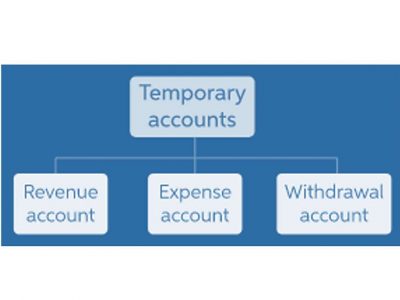
Revenue accounts keep track of the money that comes in through normal business operations so you can calculate your net income and operating revenues. Reference numbers are used within a chart of accounts as the leading digit on each account number denotes its type. This code makes it easier to find specific transactions in your chart of accounts. The balance sheet provides insight into the business’s current financial health and whether or not it owes money. The format of Chart of Accounts Numbering can vary depending on the company’s needs, but it typically consists of a series of numbers or letters that represent a specific category or account. For example, assets may start with the number 1, liabilities with the number 2, and so on.
Retail business
Each account in this example can be further detailed or expanded based on the specific needs of the business, such as adding separate accounts for different types of services or inventory. The exact numbering structure and ranges may vary depending on the size and complexity of the business, as well as the accounting software or system being used. The goal is to create a logical, organized, and easy-to-follow numbering system that accurately reflects the company’s financial transactions and reporting needs. You can usually find your assets on the balance sheet (one of the three standard business financial statements) that provides a snapshot of a company’s financial position at a specific moment. Assets are listed on the balance sheet in order of liquidity (the term to denote how easily and quickly an asset can be turned into cash without losing its value). The most liquid assets (such as cash) are listed first, followed by less liquid assets (such as inventory and PP&E).

Assets: What Your Business Owns
In computerized accounting systems - many of the software companies provide a standard chart of accounts customized to suit different types of businesses. A chart of accounts has accounts from the balance sheet and income statement and feeds into both of these accounts. With online accounting software, you can organize and track your balance sheet accounts.
- It was like the first try to introduce double-entry bookkeeping, being a significant milestone.
- The general ledger provides a comprehensive view of your financial activities.
- For example, manufacturing may need different codes to a retail business.
- Long-term loans or leases and other long-term obligations (usually due beyond a year) are non-current liabilities.
- Operating expenses are the costs needed to run a business day-to-day, for example, rent and salaries.
- Our partners compensate us for advertisements that appear on our site.
- Provide each account with a clear title and a brief description that outlines the types of transactions it should capture.
Not Customizing for the Client’s Industry
Double Entry Bookkeeping is here to provide you with free online information to help you learn and understand bookkeeping and introductory accounting. The sample chart of accounts template What is bookkeeping will help you to produce your own chart of accounts, and is available for download in Excel format by following the link below. This way, you know that anything starting with "1" is an asset, and anything starting with "11" is a current asset. Always customize the COA based on the client’s industry, business model, and regulatory requirements to ensure accurate reporting. Set a schedule to review the COA at least once a year, or anytime the business undergoes major changes. Use these reviews to clean up duplicate or outdated accounts and reorganize categories where needed.
- Let’s say you sell an asset – not including inventory – for greater than that asset’s book value.
- The chart of accounts serves as the foundational framework used to generate the financial statements for a business.
- Balance sheet accounts tend to follow a standard that lists the most liquid assets first.
- If you use an Excel spreadsheet, you will still have a list of accounts, though it may be simplified to a cloud-based accounting software package.
- This systematic approach not only simplifies data entry but also enhances the clarity and consistency of financial reports, making it easier to track and analyze financial performance.
Add an account statement column to your COA to record which statement you’ll be using for each account, like cash flow, balance sheet, or income statement. For example, balance sheets are typically used for asset and liability accounts, while income statements are used for expense accounts. This method is widely utilized in various financial management software and accounting systems, consolidating its significance in modern financial data management. This method serves a crucial purpose in accounting practices by streamlining the process of categorizing financial accounts. By assigning unique numerical codes to each account, it becomes easier to identify, track, and manage financial transactions.
For example, if you have unneeded categories in your COA, it’s usually not a good idea to eliminate them mid-period due to possible orphaned data in your financial statements. The expense accounts category captures all of the money you spend generating revenues for your company – advertising expenses, employee benefits, office supplies expenses, rent, utilities, and endless more. These accounts equate to the equity value remaining in your business after deducting your liabilities from your assets. In short, this is a way to measure how valuable your organization is to its owners. Similarly, your liability accounts are a list of the debts your business owes to creditors. Naturally, items like accounts payable, invoices payable, interest payable, accrued liabilities, sales tax payable, and other liabilities fall within this list.
- Accounts should be organized in a manner that reflects their nature and purpose, such as grouping all asset accounts together.
- If you want to learn accounting with a dash of humor and fun, check out our video course.
- This is especially helpful when your business grows and your financial records get more complex.
- While smaller businesses may have a simpler, less detailed COA, larger enterprises might require a more complex and detailed structure to accommodate various departments, projects, or locations.
- The number system for each liability account can start from 2000 and use a sequence that is easy to follow and compare in different accounting periods.
- After almost a decade of experience in public accounting, he created MyAccountingCourse.com to help people learn accounting & finance, pass the CPA exam, and start their career.
This allows for much greater granularity and the ability to categorize accounts with extreme precision. For example, the first two digits might represent the division, the next two the department, and the final digits the specific https://vshassociates.in/accounting-firm-salt-lake-city-bookkeeping-2/ account type. This way, you can easily track financial performance at every level of the organization.

Cash Flow Statement

The chart of accounts helps you organize your transactions into a convenient view of how the money chart of accounts numbering moves through your business. The chart of accounts (COA) is a list of accounts a company uses to record its financial transactions. Granted, by the time they hit your financial reports, you’re probably grouping them in a line item anyway. However, the chart of accounts plays a critical role in how your revenue accounts, for instance, flow into the profit and loss statement.
Expenses: What your business spends
Most COAs use a standard numbering convention to record transactions and group accounts by category. This approach keeps your reporting consistent and makes it easier to retrieve financial information. Start with simple blocks, such as 1000 for assets and 2000 for liabilities, and leave space between numbers so you can add new accounts without renumbering.
How is Chart of Accounts Numbering used in accounting?

A company’s organization chart can serve as the outline for its accounting chart of accounts. Each department will have its own phone expense account, its own salaries expense, etc. The code used will depend on the complexity of the business and the amount of detail required from its financial reporting system. Each account within the CoA should have a clear and concise description to ensure consistent use across the organization. Maintaining this structure consistently over time is crucial for accurate financial comparisons and compliance with accounting standards.
